
The electrode is the one part of a resistance welding cell that touches every weld. Choose the wrong material and you get sticking, mushroomed tips, inconsistent nuggets and constant dressing. The two families most OEMs choose between are copper alloys and copper-tungsten composites. Here is how they differ and when each one makes sense.
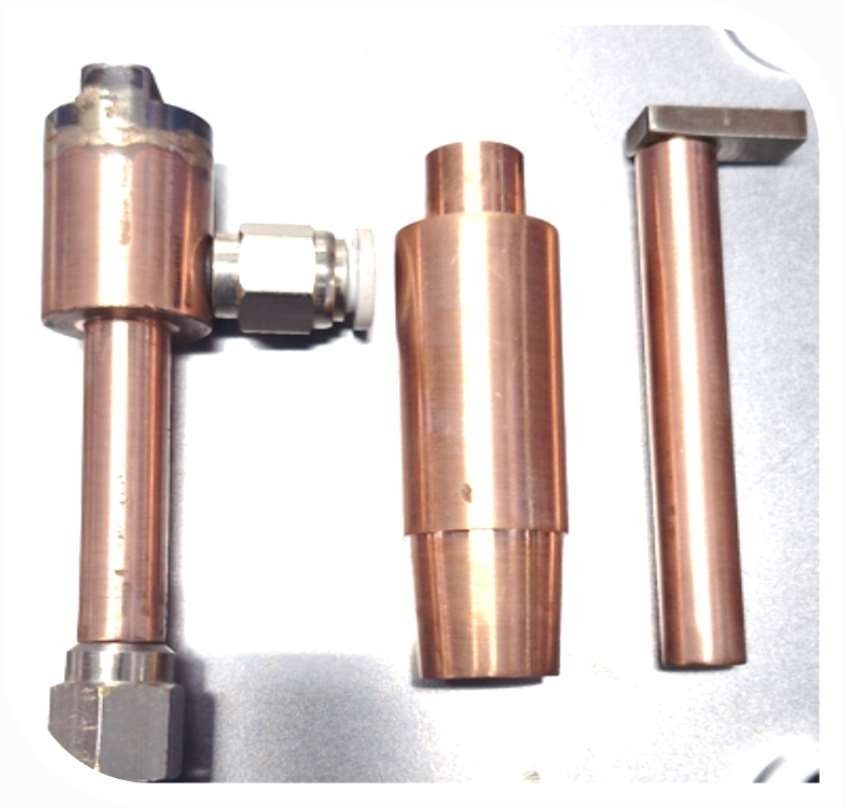
A resistance welding electrode carries high current into the workpiece, applies clamping force, and pulls heat away from the weld zone, all at the same time. That means the material needs three properties that pull in different directions: high electrical conductivity, high thermal conductivity, and enough hot hardness to resist deformation under repeated force.
Copper alloys are the default for most spot welding of steel sheet. They conduct current and heat very well, so the electrode face stays relatively cool and the weld energy goes where it should: into the joint.
Copper-tungsten is a composite: a porous tungsten skeleton infiltrated with copper. Tungsten brings hardness, a very high melting point and resistance to arc erosion. Copper keeps conductivity at a usable level. Grades with a higher tungsten share are harder and more wear-resistant but conduct less.
Face geometry, cooling and fit-up often decide electrode life. Keep the water-cooling channel close to the face, specify the face diameter for the sheet thickness you weld, and make sure tapers and holders are machined to a consistent standard so caps seat properly. A good supplier will ask about your welding machine, current, force and cycle rate before recommending a grade.
Voltkon manufactures pure copper and copper-tungsten welding electrodes to drawing, including tipped and custom-profile designs, for switchgear, automotive, electronics and appliance applications. See our welding electrodes capability, or send us your drawing for a quote.