A coil drawing that says only "copper coil, 200 turns" leaves most of the important decisions to the supplier. A complete specification gets you consistent parts from the first batch and makes quotes from different suppliers comparable. Here is what to include.
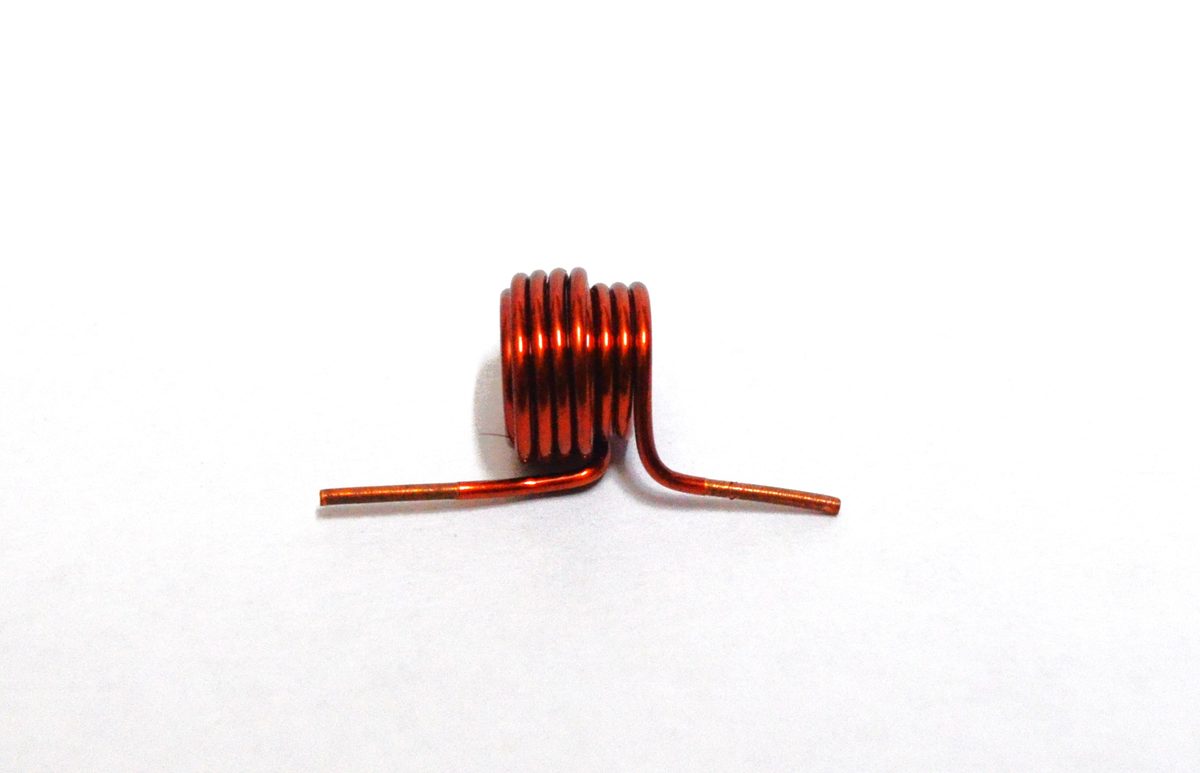
Double-layer enamelled copper coil wound by Voltkon.
1. Conductor and insulation
- Wire size: state the bare conductor diameter (or width and thickness for rectangular wire) and the tolerance.
- Insulation build: enamelled wire comes in different insulation thicknesses, commonly called grades. A thicker build gives more voltage margin but takes more space in the winding.
- Thermal class: specify the temperature class the enamel must withstand, for example 155 °C (Class F), 180 °C (Class H) or 200 °C and above. Choose it from the coil's real operating temperature, including self-heating, not just ambient temperature.
- Self-bonding wire: for air-core coils that must hold their shape without a bobbin, a bonding overcoat can be activated by heat or solvent after winding.
2. Winding design
- Coil type: bobbin-wound, self-supporting (air-core), single-layer or multi-layer, round or rectangular.
- Turns and tolerance: the turn count, and whether DC resistance or turns is the controlling characteristic.
- Dimensions: inner and outer diameter or envelope, length, and any critical fit features.
- Winding direction and lead positions where they affect assembly or polarity.
3. Terminations
Define how the coil ends connect: stripped leads of a set length, soldered or welded to terminals, or crimped. Enamel removal and the joint method must suit the thermal class, since some enamels need mechanical or thermal stripping before a reliable joint can be made.
4. Electrical tests
- DC resistance at a stated temperature, with tolerance
- Insulation resistance and Hi-Pot between winding and core or frame where relevant
- Inter-turn checks (for example surge testing) for coils where a shorted turn would go unnoticed in a simple resistance check
- Inductance where the coil's magnetic performance is critical
5. Supply format
Decide whether you want loose coils or coils supplied as part of a sub-assembly: wound onto a frame, joined to terminals, or built into a trip unit. Buying the sub-assembly from the coil maker removes a handover and an incoming-inspection step.
Coils from Voltkon
Voltkon winds copper, enamelled, solenoid and trip coils, plus precision wireforms, on automated winding equipment. Coils can be supplied loose or as finished sub-assemblies with stamped and welded parts, under ISO 9001, 14001 and 45001. See our coils and wireforms capability, or send us your coil specification for a quote.
