
Spot and projection welding are both resistance welding processes: current passes through parts clamped under force, and the resistance at the joint generates the heat that fuses them. They behave very differently in production, though, and the right choice depends on the part design.
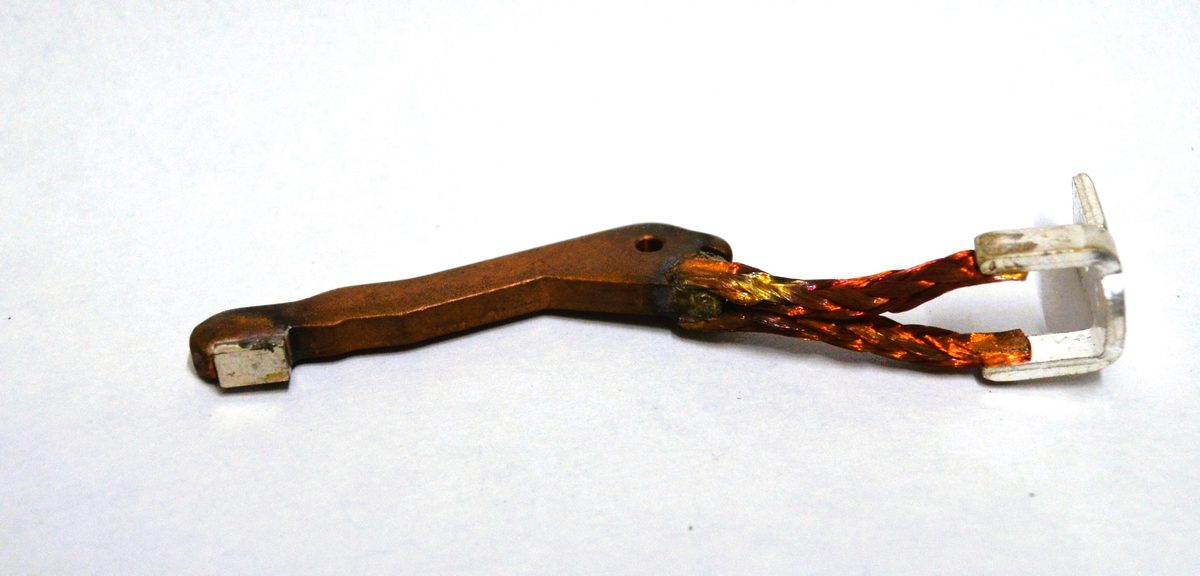
In spot welding, two shaped electrodes pinch overlapping sheets and pass current through a small contact area. A weld nugget forms where the electrode tips meet. Several welds are made one after another by moving the part or the gun.
In projection welding, one of the parts has small raised projections (embossed bumps, ridges or the features of a weld nut). Flat, larger electrodes press the parts together and current concentrates at the projections, which collapse and fuse. Several projections can be welded in a single stroke.
Current-carrying assemblies such as contact carriers, terminals with flexible connections and bus links have an extra requirement: the joint must carry current with low, stable resistance for the life of the product. Process control matters here: weld current, force and time are set per part and verified with destructive and electrical tests, not only by appearance.
Voltkon makes resistance, projection and spot-welded, and riveted, contact and current-carrying sub-assemblies. Because stamping, coils and moulding are in-house, projections and fixtures are designed together with the parts. See our welding assemblies capability and our welding electrodes, or ask for a quote.